HAVYT — an app for life with ankylosing spondylitis
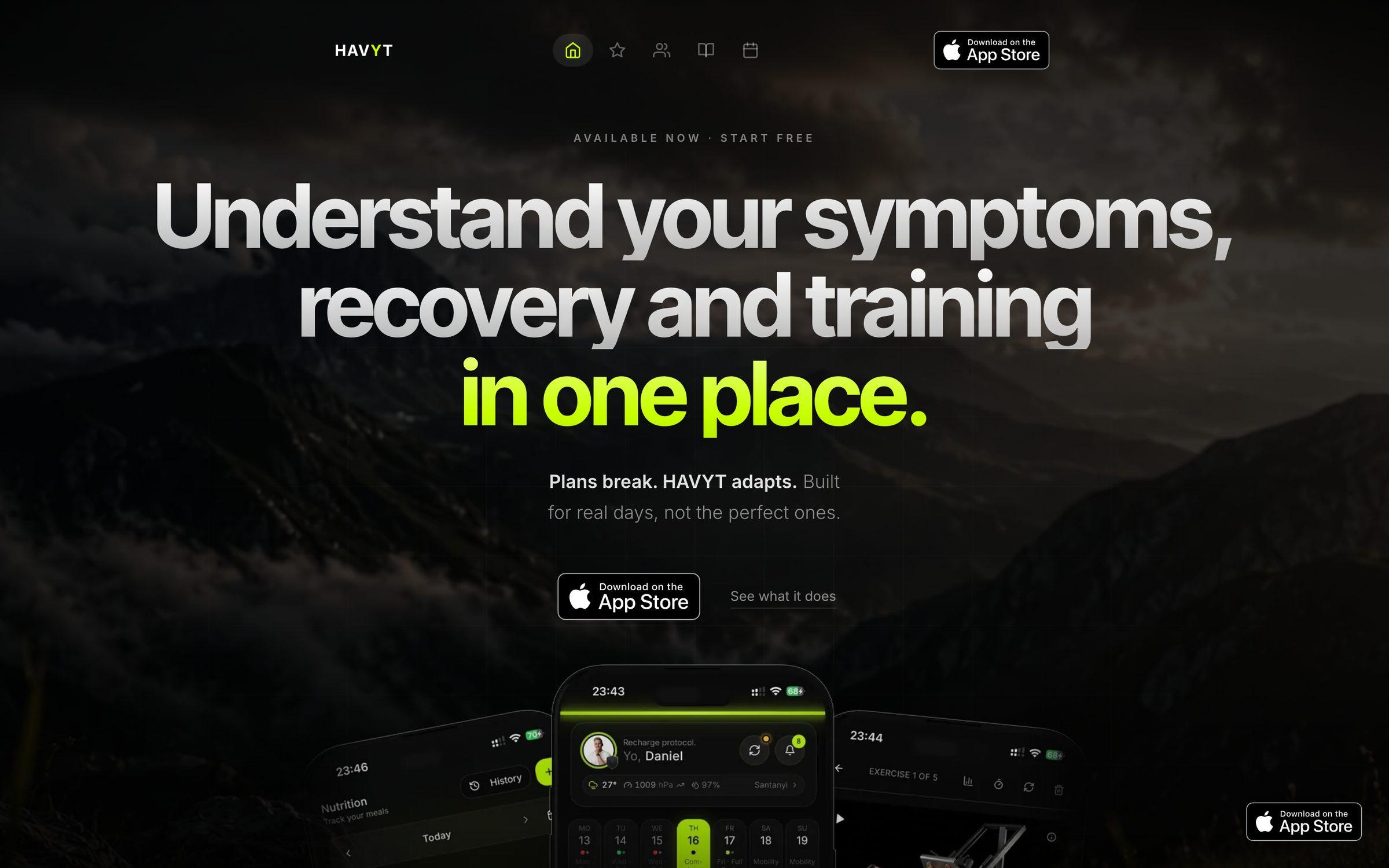
Framequality's founder lives with ankylosing spondylitis and built HAVYT: an iPhone and web app that tracks stiffness, pain, flares and BASDAI next to sleep and training.
- Client
- HAVYT
- Relationship
- Founder-built product
- Year
- 2026
- Our role
- Product concept, design, development and launch — by Framequality's founder, Daniel Gola
Services
- Product strategy
- UX and interface design
- iPhone and web app development
- Brand identity
- Marketing website
Technologies
- Vercel (hosting and CDN)
- Supabase (database, authentication, storage)
- OpenAI API (opt-in AI features)
- Apple Health integration (iPhone)
Challenge
People with ankylosing spondylitis wake up to a different body every day: stiffness that takes an hour to ease, flares without a clear trigger, fatigue that has nothing to do with yesterday. General fitness apps assume every day is the same — they record what was lifted, not how the morning felt.
Solution
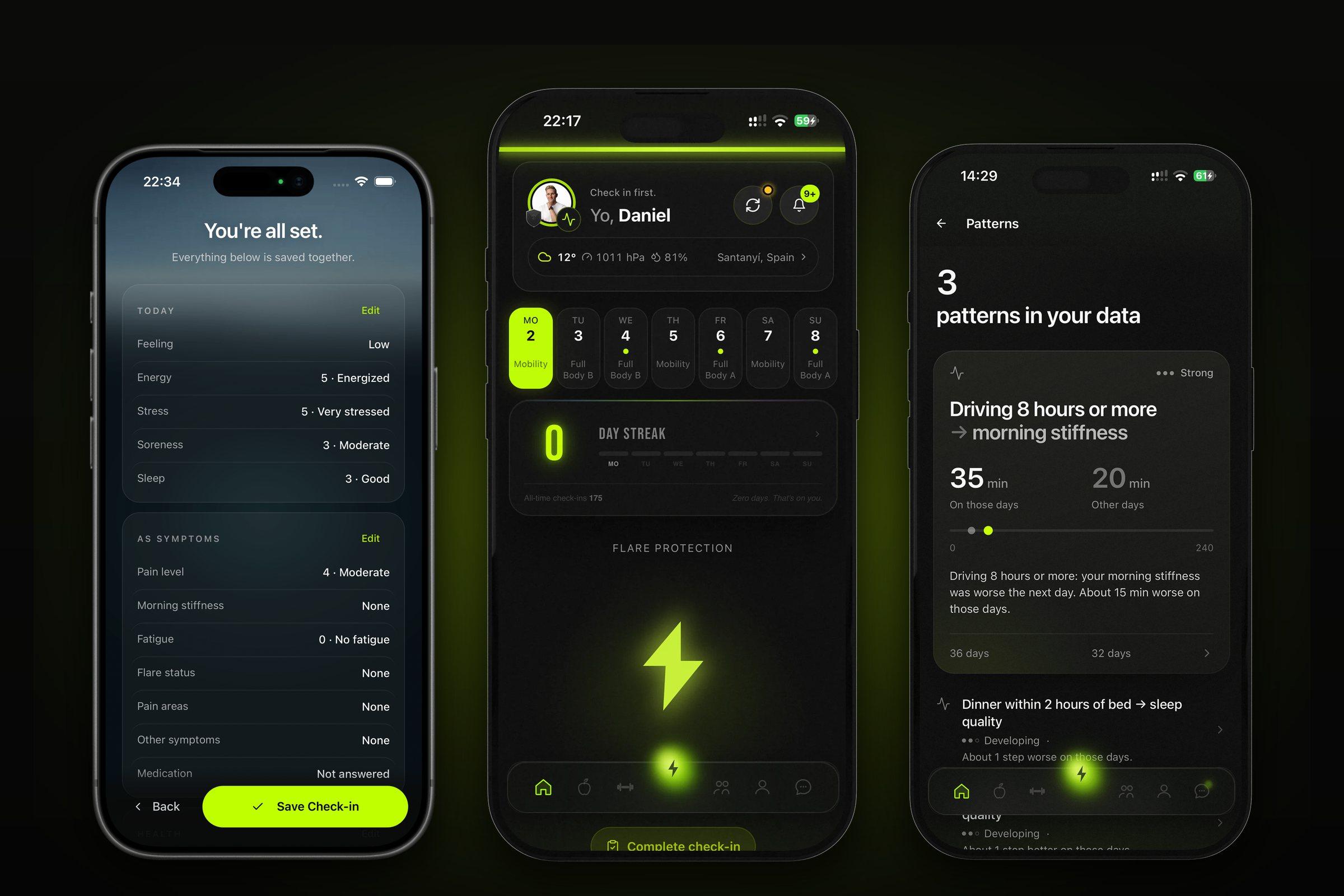
An app that starts with how the day feels: a check-in in under a minute, an AS Mode that records stiffness and pain separately, BASDAI and flare context, training that gets gentler on hard days, careful pattern detection and doctor reports for rheumatology appointments.
Outcome
Live on iPhone and in the browser since September 2026, in English, German, Spanish and Polish. Version 1.2 (November 2026) added a pain heatmap, a journal and personal patterns. The core app is free, without a subscription.
HAVYT is not a client project. It is a product that Daniel Gola, the founder of Framequality, conceived, designed and built himself, and which is operated under his name. It is also personal: Daniel lives with ankylosing spondylitis, and HAVYT is the app he could not find for himself.
Built from the inside
I built HAVYT because I wanted to understand why some days with AS felt manageable and others did not. — Daniel Gola, HAVYT 1.1 release post, September 2026
Ankylosing spondylitis (AS) is a long-term inflammatory condition that mainly affects the spine and the sacroiliac joints. Back pain and stiffness are typically worse in the morning and ease with movement; symptoms come and go. AS belongs to the spectrum of axial spondyloarthritis (axSpA).
For years, Daniel tracked pain, stiffness, sleep and workouts in separate apps that never spoke to each other. Training is part of his daily routine — but every fitness app assumed the same person wakes up every morning, and marked a hard day as a missed one. HAVYT started as the tool he wanted: one place where the day begins with how the body actually feels.
What HAVYT does for people with AS
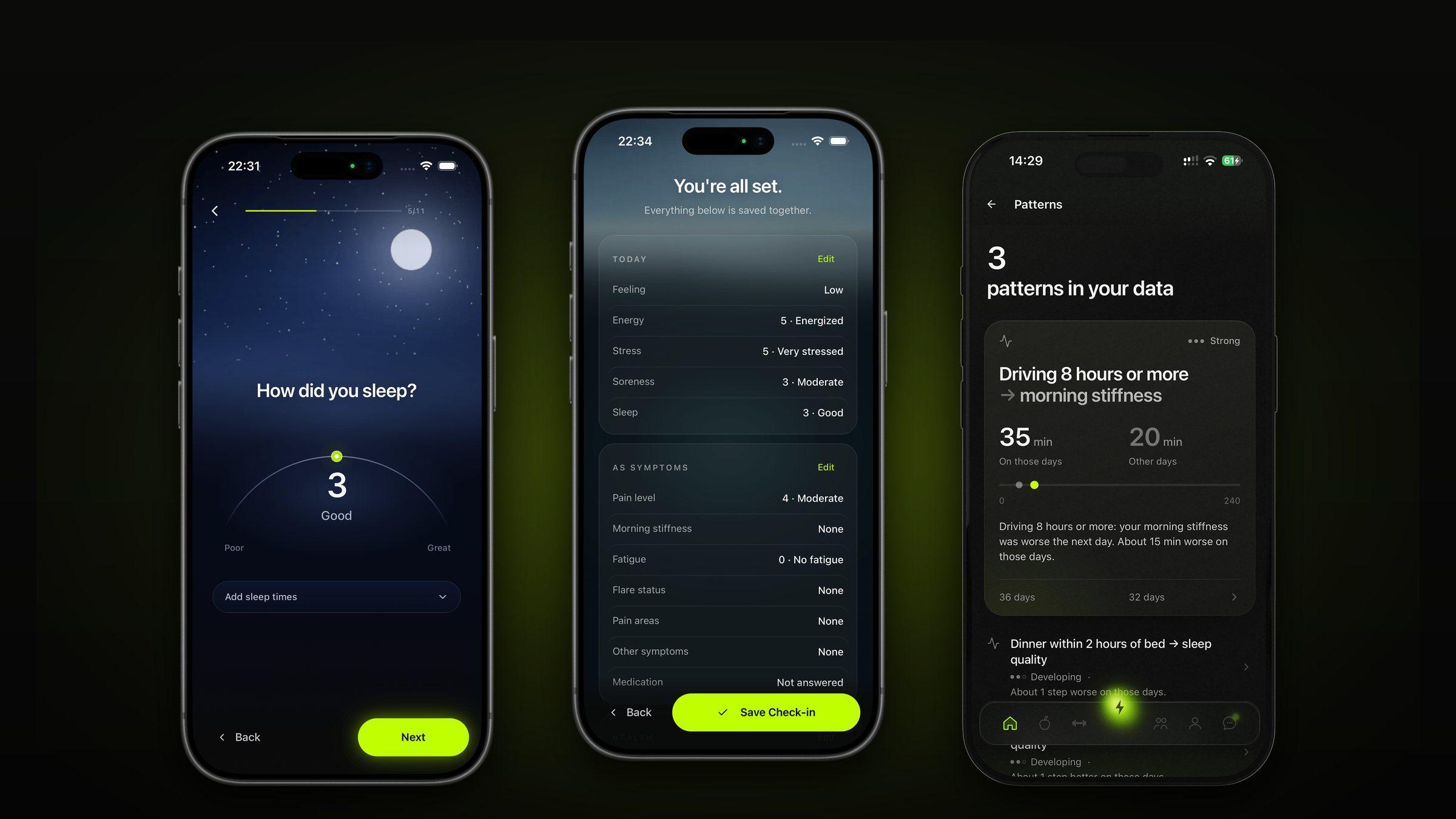
- A daily check-in in under a minute for pain, stiffness, energy, sleep and mood — short enough for the hard mornings.
- AS Mode records stiffness and pain as separate signals: morning stiffness by duration and severity, spinal and joint pain by region. It raises the whole app's sensitivity to stiffness, fatigue and flare-like patterns.
- BASDAI tracking, the recognised six-question self-report measure, charted over time — so a rheumatology appointment starts from a trend rather than a memory.
- Flare context: when a flare starts and settles, and what the days before it looked like — shown as an association to raise with the care team, never as a cause.
- Adaptive training that rescales to the morning you woke up to. A gentler mobility session counts as showing up and keeps the streak alive.
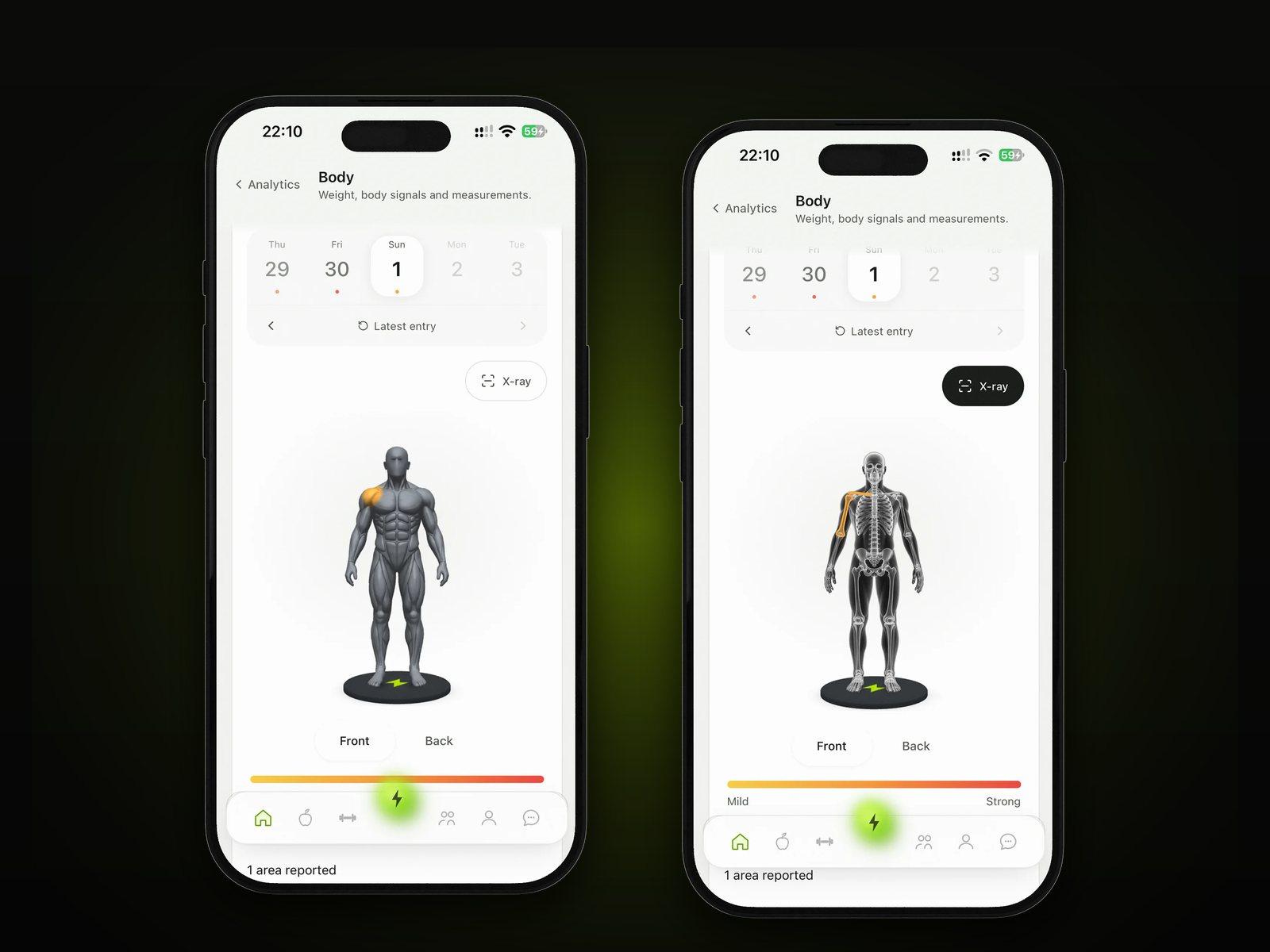
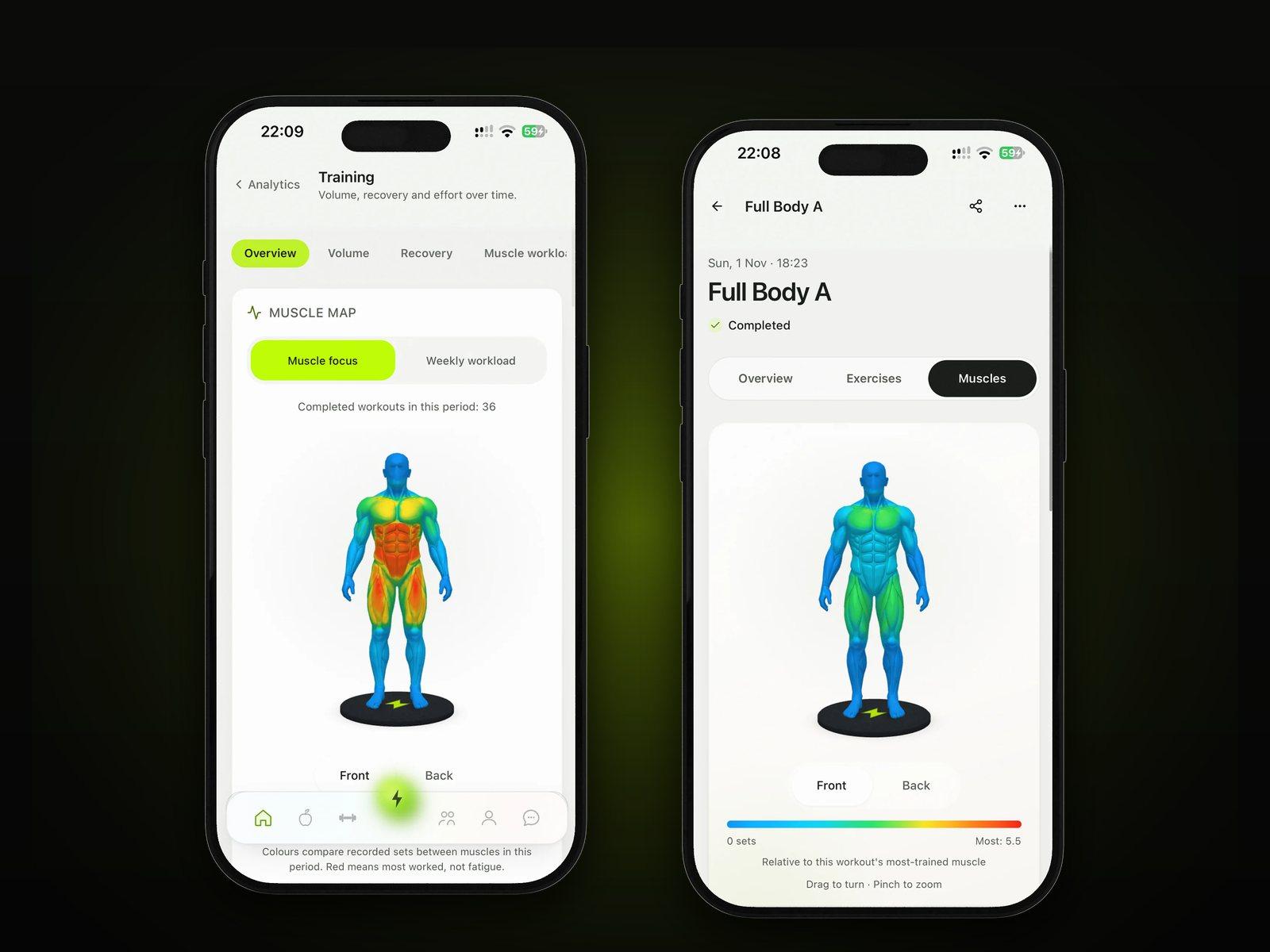
- Pain heatmap (new in 1.2): where discomfort was logged, on a 3D body with an illustrative X-ray view.
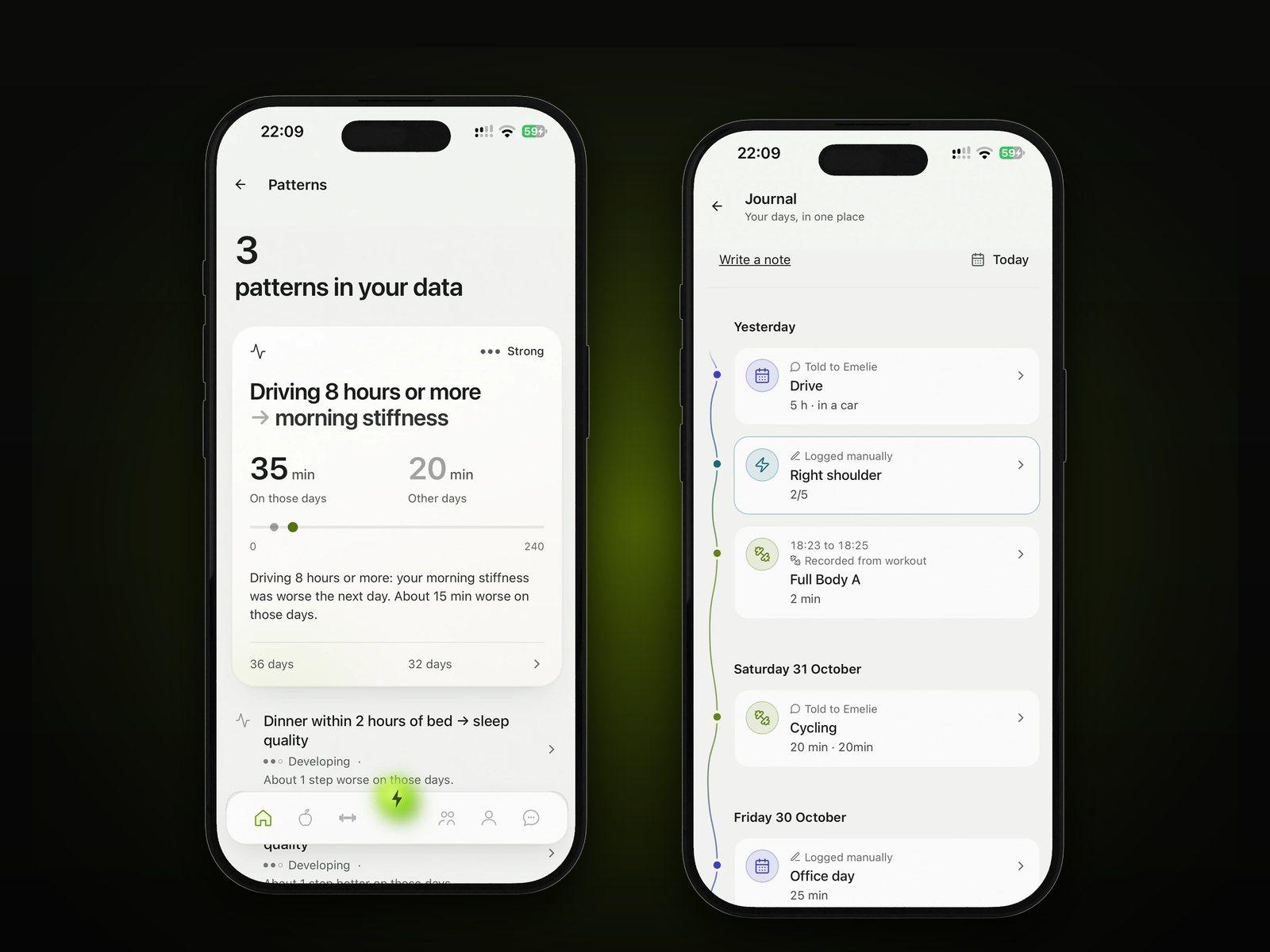
- Personal patterns and a journal (new in 1.2): possible connections between activities, routines and symptoms, with the evidence behind them and where more data is needed.
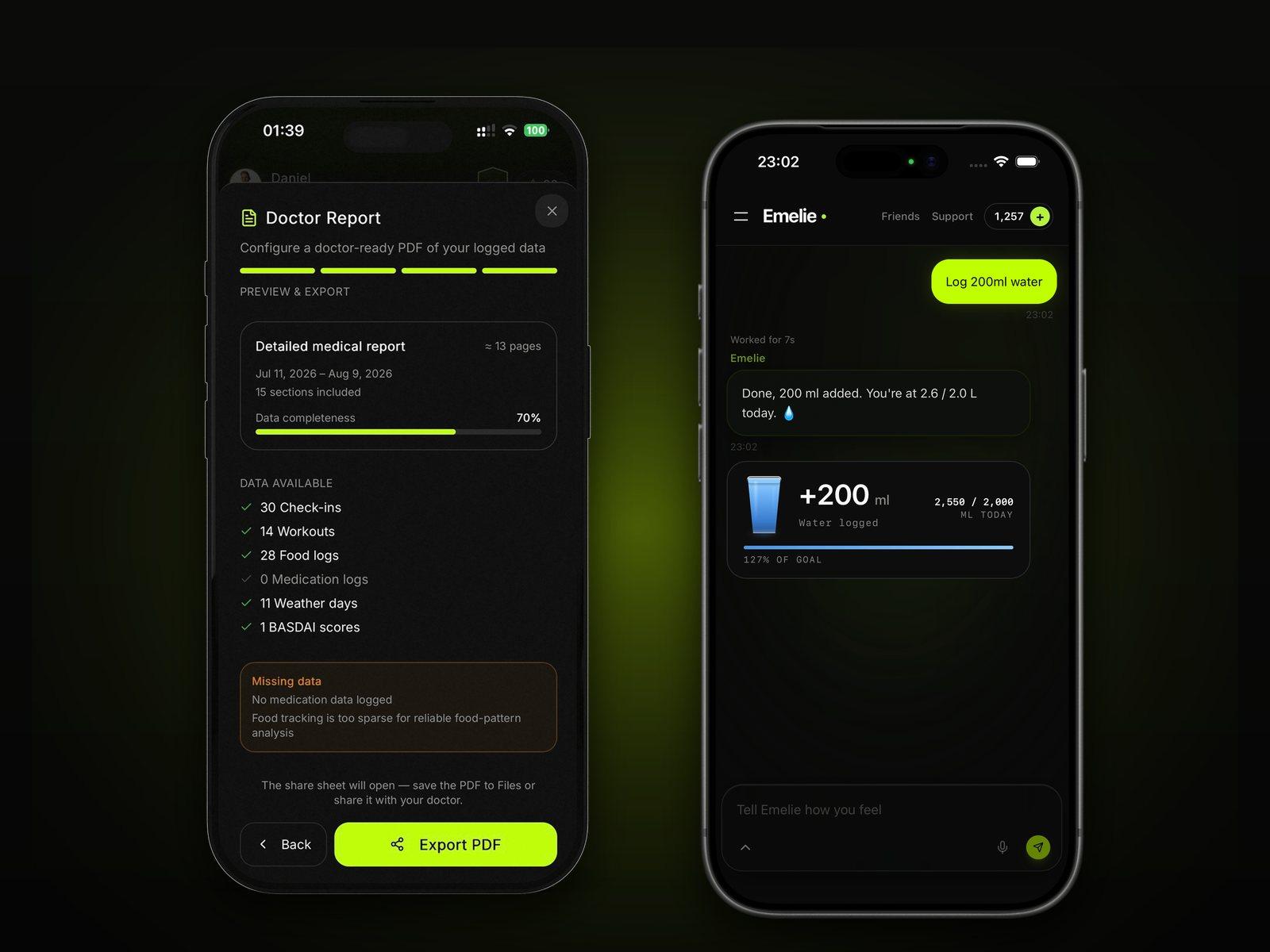
- Doctor reports: months of logs condensed into a configurable PDF — date range, sections, level of detail and optional anonymization.
- Emelie, an AI coach by chat or voice, which reads the user's context before answering — switched off until the user enables it.
- Optional Apple Health sync on iPhone. No wearable required; everything can be logged by hand.
HAVYT is a wellness and self-tracking app, not a medical device. It does not diagnose, does not predict flares and does not replace a rheumatologist — and HAVYT says so clearly.
Design decisions that matter
Hard mornings first
The interface is designed for the day that starts badly: a check-in that takes under a minute on most mornings, and no guilt when the plan changes. A lighter day is a reasonable choice, not a failure — the app's language, streaks and training plans are all built around that.
Careful with conclusions
Health-adjacent data invites overconfident claims. HAVYT shows patterns as possible connections, with the evidence and the gaps. Even the thermal-style muscle map says what its colours mean: recorded work, not body temperature or injury.
Privacy as a product feature
AI features are off until the user switches them on; when they are enabled, only the submitted message and the relevant context are sent to the AI provider. Users can export their data and delete their account in the app, and HAVYT does not sell personal data or use it for advertising.
One brand across product and website
The name, the lightning mark and the lime accent run through the app (now in dark and light mode), the App Store presence and the website — which also carries guides on living with AS, a free BASDAI calculator and a press area.
Technology
HAVYT's website and web app are hosted on Vercel; Supabase provides the database, authentication and storage. Opt-in AI features use the OpenAI API, and the iPhone app integrates optional Apple Health data. The same principles we apply to client projects were applied here: proven, widely used technology, a clear data model and privacy by design.
What this means for clients
Building and running a product like this ourselves — for a community our founder is part of — gives us first-hand experience with the questions clients face when they commission custom software: how to scope a first version, how to structure sensitive data, how to design interfaces people use every day, how to integrate AI responsibly and how to explain all of it on a website. If you are planning a client portal, an internal tool or a digital product, we would be glad to talk about it.
